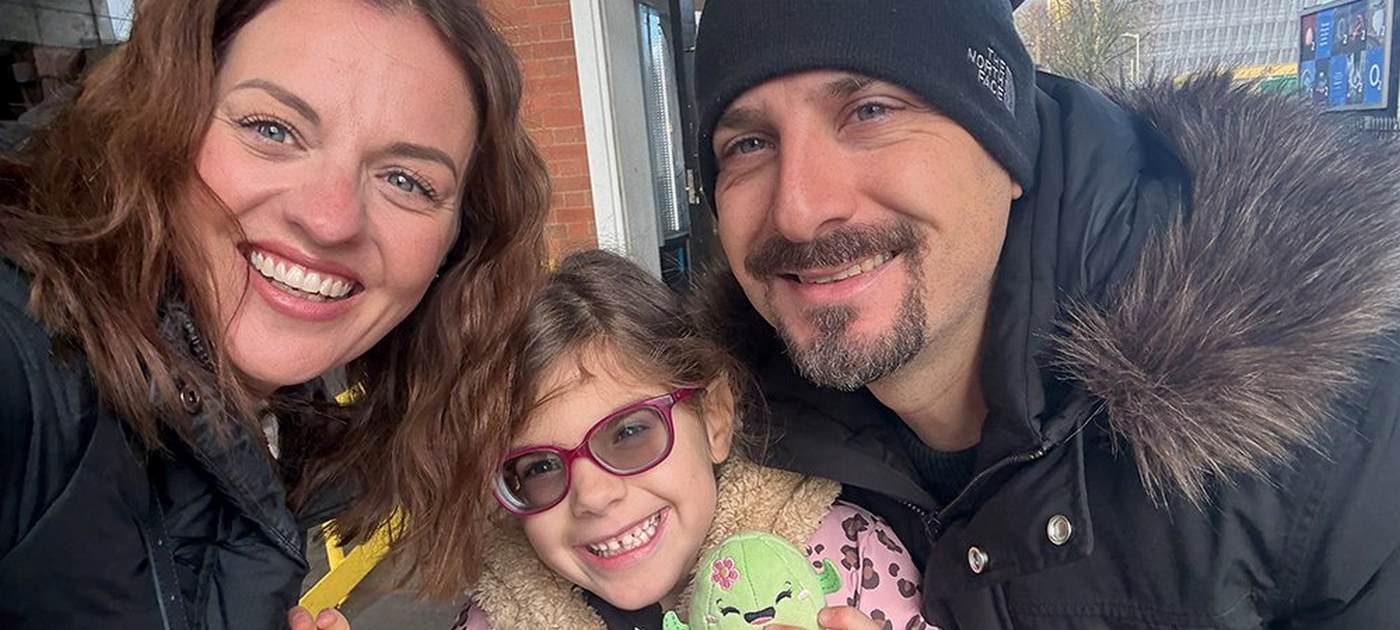
In the sun-dappled streets of Stevenage, a little girl named Saffie Sandford stepped out into the world with a newfound brightness in her eyes. Just six years old, Saffie had endured the shadow of Leber Congenital Amaurosis (LCA) since birth, a rare genetic condition that robbed her of sight. Day and night, she had navigated life in darkness, held back by a mutation in her RPE65 gene. But on this warm afternoon, a miraculous change had unfolded that would change Saffie's life forever.
The journey to this moment began when Saffie's parents, emboldened by their love and hope, sought help from specialists who understood the complexities of this rare form of blindness. After being diagnosed, Saffie became one of the youngest patients ever to receive a groundbreaking one-time gene therapy called Luxturna, which was designed to target the very genetic defect that limited her vision. It was a glimmer of hope that built a bridge from despair to possibility.
Weeks before the therapy, Saffie's world had been defined by uncertainty and fear. Simple joys like watching the colors of the sunset or recognizing her friends on the playground felt like distant dreams, mere flickers of what could be. But on the day the gene therapy was administered, she entered the clinic clutching a stuffed animal tightly—a small comfort against the unknown.
The therapy was swift yet profound. Delivered through a single injection in her eye, it carried a modified virus that introduced the healthy copy of the RPE65 gene directly into the retinal cells, effectively "rewiring" her vision. The procedure was nothing short of revolutionary, and Saffie's family felt a mix of fear and exhilaration as they watched her brave the unknown.
Just days later, the transformation began to unfold. It started with tentative glances at the world, then blossomed into confident recognition of shapes and colors. “Saffie is now enjoying the world she has never seen before,” her father shared, his voice barely concealing the emotion swirling within. “To see her react to things she never knew existed is incredible.”
No longer was she confined to the shadows. Each day, Saffie explored her surroundings with childlike wonder and curiosity, her eyes reflecting a brilliance that had been stifled for too long. Whether she was chasing butterflies in the garden or playing with her friends at school, her laughter rang out clear and bright, a melody that echoed the joy of a child unfettered by darkness.
This remarkable turnaround not only paved the way for Saffie's bright future but also illuminated a path of hope for countless others grappling with similar challenges. The advancements in gene therapy signal a new era in medicine, one that holds the promise of restoring vision and transforming lives. As more families confront conditions like LCA, stories like Saffie's provide a beacon of hope, reminding us of the miracles that science can bring when paired with faith and determination.
For Saffie and her family, the world is now a canvas splashed with colors and light. As they bask in the joy of her restored vision, they are filled with anticipation, dreaming of all the adventures yet to come. What once seemed impossible—a life rich with experiences and laughter—is now their beautiful reality. With each new day, Saffie's vision continues to flourish, a testament to the power of love, hope, and the incredible advancements of modern medicine, reminding us all that sometimes, miracles do happen.