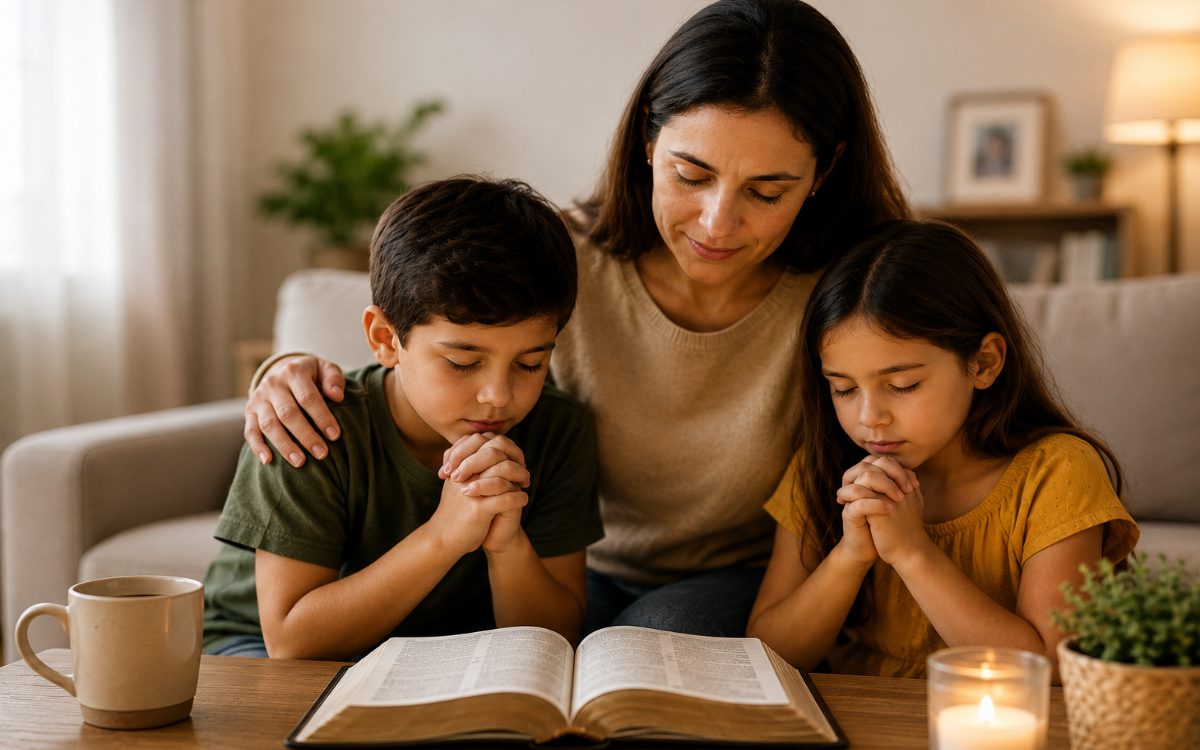
The sun poured into the small living room, illuminating the pictures of family moments that adorned the walls. In one corner, a mother was seated on a plush, worn sofa, a Bible opened on her lap. Her voice lifted in prayer, tangible warmth enveloped her children, who played nearby, unaware of the profound impact that moment would have on their spiritual futures. This intimate scene captures the powerful influence mothers wield in shaping their children's spiritual lives—a phenomenon explored by renowned Brazilian psychologist Dr. Ana Carla de Oliveira.
Dr. Oliveira emphasizes the critical role mothers play in their children's formation, both emotionally and spiritually. “The mother is the first point of contact with God for her children,” she explained. “From the very beginning, her role in teaching them about faith, love, and devotion is paramount.” Citing studies that link maternal influence to children's spiritual development, she articulates a striking hypothesis: mothers are not just caregivers but foundational pillars in the spiritual journey of their offspring.
Diving deeper into the science of parenting, Dr. Oliveira observes that a mother’s affection and nurturing instincts create an environment ripe for spiritual growth. Her consistent presence fosters security, allowing children to explore their feelings about faith and morality without fear. “It’s like planting seeds in a fertile ground,” she elaborated. “These seeds grow into a deeper understanding of God and a sense of belonging in the spiritual community.”
As mothers guide their children through life’s lessons—ranging from teaching them how to pray to instilling a sense of gratitude—their influence stretches across generations. Dr. Oliveira recalls a touching story from her practice. A young woman named Maria shared how her mother’s nightly prayers had become a nightly ritual, one that shaped her understanding of God’s love. “She said, ‘It was as if my mother’s voice carried me into God’s presence,’” Dr. Oliveira recounted with a smile. "These moments, however simple, carry such depth of meaning."
Reflecting on the broader societal implications, Dr. Oliveira notes that the influence of mothers extends beyond the home. As women impart spiritual teachings within their families, they also contribute to their communities and churches, fostering environments of faith and resilience. “A spiritual mother can raise an army of faith-filled children,” she asserts, referencing Proverbs 22:6: “Train up a child in the way he should go; even when he is old he will not depart from it.”
Yet, the journey isn’t without its challenges. In modern society, where distractions abound and family dynamics are constantly shifting, the nurturing role of mothers may become threatened. Dr. Oliveira urges the community to support mothers in their vital work. “We need to come together to empower them, ensuring they know their contribution is invaluable,” she states passionately.
The impact of a mother's spiritual influence can resonate for years, facilitating the cultivation of a faith that persists through life's trials and triumphs. As the living room sunlight faded into dusk, a moment of quiet reflection settled over the family. Each prayer and piece of wisdom shared earlier that day became echoes in their hearts—reminders of their mother’s steadfast faith.
In this story of maternal influence, one thing becomes clear: as mothers embrace their role in guiding their children’s spiritual journeys, they create a legacy steeped in faith, love, and hope—one that can light the path for generations to come. As we look forward, let us cherish and support mothers in their sacred mission, knowing that their devotion shapes not just families, but entire communities, enriching the world with the light of faith.