The sun dipped low over the horizon in Madrid, casting a golden glow across the bustling streets where shops were beginning to close and families gathered for evening meals. It was in this vibrant city, with its rich tapestry of history and culture, that an ambitious announcement echoed through the Evangelical community—the Federación Evangélica Española (FEE) unveiled an extraordinary plan: the opening of 100 new churches across Spain.
Gathered at the FEE's headquarters, leaders from various congregations shared their visions, excitement palpable in the air. Dr. José Carlos Múgica, a prominent figure and the president of the FEE, stood in front of a group of passionate individuals, eyes bright with purpose. “This is not merely about constructing buildings; it’s about building communities and lives,” he affirmed. His words reverberated with the weight of a mission that is, at its core, about nurturing faith and hope in a society that has seen a gradual decline in religious observance.
As Dr. Múgica looked at the map they had designed for this ambitious endeavor, he highlighted areas marked with a red ‘X’—regions in urgent need of spiritual revitalization. “We’re focused on places where the gospel is hardly known but desperately needed,” he elaborated, a hint of urgency in his voice. His vision extends beyond mere attendance; this movement aims to integrate Christianity into the fabric of everyday life in communities where, according to statistics, only 1 in 100 Spaniards identify as Evangelical.
At the heart of this mission lies a deep desire to connect with the people. The strategy involves recruiting local leaders, equipping them for ministry, and establishing roots in neighborhoods that are often overlooked. “Our goal is to create a network of churches that work as a family,” Dr. Múgica explained. The plan is not just about Sunday services; it’s about fostering community engagement, food banks, and programs designed to support those in need.
On the ground, congregations in smaller towns have already begun to feel the ripples of this movement. In Almería, a small group of believers has been meeting in a humble café each week. María, a church member, shared how their gatherings have transformed her life. “I was lost and alone; I didn’t know where to turn. But now, through this church, I’ve found family and purpose,” she said with a smile that lit up her face. Her hope mirrors that of the FEE's strategic initiatives—a hope that those who feel isolated will find a welcoming embrace in this growing network of churches.
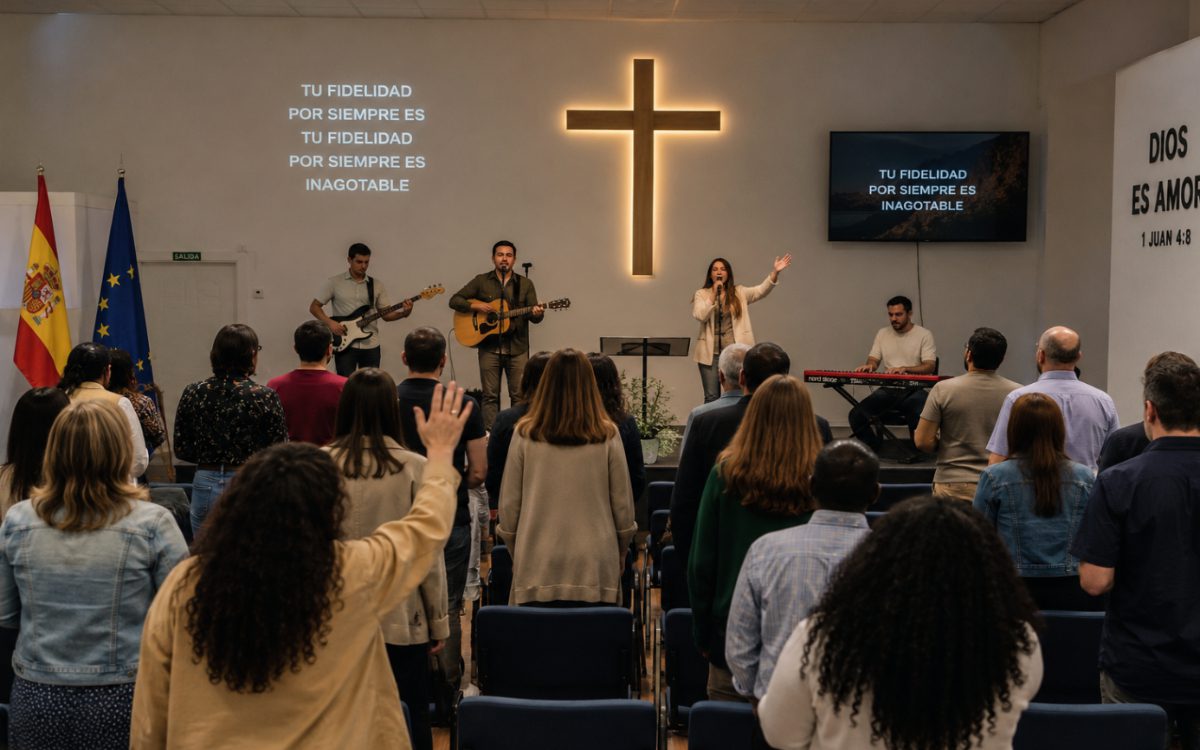
As the evening deepened, the leaders at the meeting began to pray together. They knew this journey wouldn’t be without its challenges, but faith was at the core of their resolve. "For with God, nothing shall be impossible," Drew, a youth pastor, quoted from Luke 1:37, reinforcing their commitment to pursue this daunting task with love and perseverance.
The urgency of the need is clear: as more Spaniards move away from traditional religious practice, the FEE's bold endeavor represents a beacon of hope. It is a reminder that even in the face of declining church attendance, there lies a profound opportunity to spread the message of Jesus Christ in innovative and impactful ways.
As leaders prepared to leave the meeting, there was a sense of unity and purpose. They understood that opening these churches would take time, resources, and commitment, but the promise of real, transformative change fueled their conviction.
With plans laid out and prayers lifted, the dream of 100 new churches loomed on the horizon, a vibrant testament to the enduring power of faith. This initiative not only represents a geographical expansion but an invitation for many, once on the fringes, to come home. What comes next is more than just construction; it’s about the heart of the gospel reaching out, welcoming all into a community bathed in love and grace.