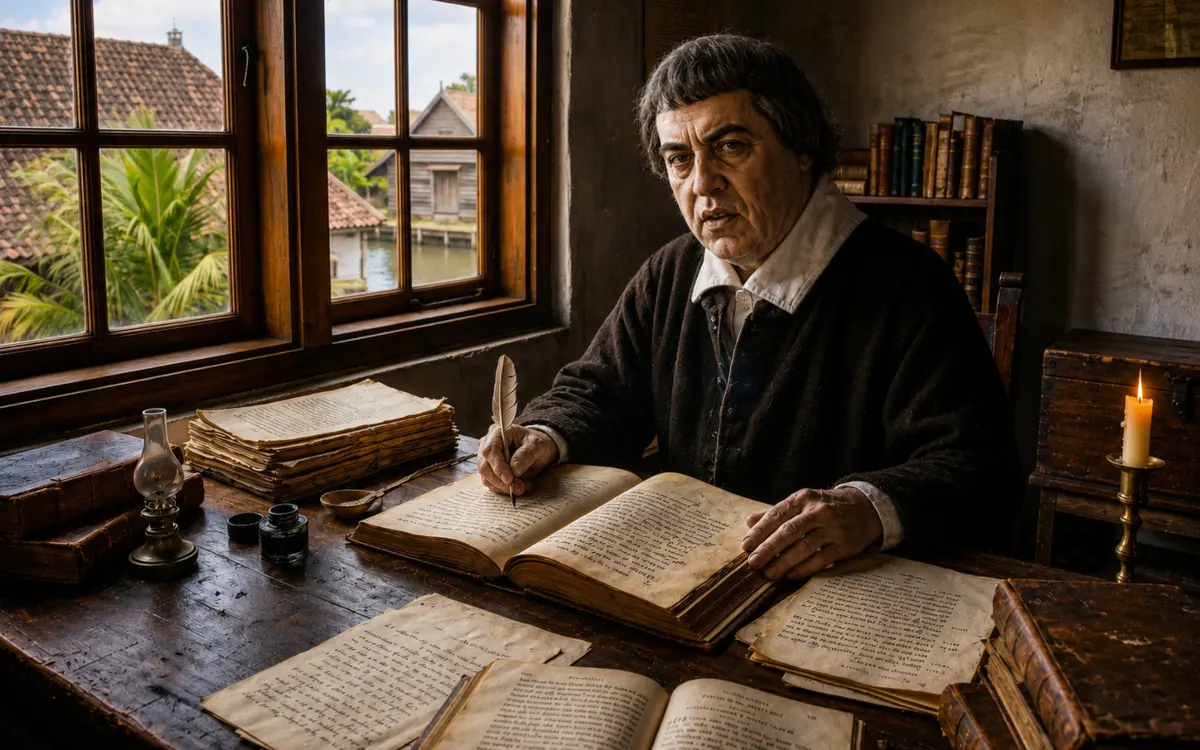
On an ordinary day in the bustling streets of 17th century Portugal, a humble man named João Ferreira de Almeida emerged as a beacon of hope and scriptural truth. Little did he know, the Inquisition was closing in, its dark shadow looming over his work as a translator of the Bible—work that would ultimately set a flame to the hearts of many, igniting a passion for God's Word in his homeland.
Almeida, born in 1628 in the city of São Tomé, was not only a scholar but a committed servant of Christ with an unwavering faith. At a time when the Catholic Church held a tight grip on religious texts and interpretations, Almeida embarked on an audacious mission: to translate the Bible directly from its original languages into Portuguese. This is no small feat; it’s a venture fraught with peril, especially given the Church’s strict doctrine that deemed many translations heretical.
As Almeida diligently worked on his translation, he quickly understood the stakes at play. The Inquisition, a force that crushed dissent and unconventional thinking, sought to silence him. Those who dared to challenge the accepted religious norms were often met with severe punishment, and Almeida well knew the dangers of his undertaking. "They wanted to silence me," he reflected, highlighting the oppressive atmosphere that surrounded his efforts.
However, the plans of the Inquisition were thwarted time and again, not because of Almeida's clever avoidance of detection, but rather due to his steadfast conviction that the Scriptures should be accessible to all. "I believe that everyone has the right to read the Bible," he declared, his desire for transparency evident in his voice. This belief transcended the fear instilled by those in power, driving Almeida to push forward despite looming threats.
In 1681, after years of painstaking translation and refinement, Almeida finally achieved a significant milestone with the publication of his New Testament, a groundbreaking event that would change the landscape of Portuguese Christianity. His translation was not just a work of linguistics; it became a catalyst for spiritual revival, fostering a deep hunger for the Word among his fellow countrymen. As Almeida himself said, “The Word cannot be shackled.”
Almeida's work didn’t stop there. He continued to revise and complete the Old Testament, ultimately publishing a version that many would come to cherish deeply. His translations spoke not only to the intellectual understanding of Scripture but also to the emotional and spiritual needs of the people. In the midst of oppressive darkness, he illuminated the path with the light of God’s Word.
Despite the Inquisition’s efforts, Almeida’s legacy would outlive its grip. His translation, known as the "Almeida Version," became the standard for many Portuguese-speaking Protestants. Today, it remains a vital part of their religious practice, symbolizing resilience and faith against formidable opposition.
As we reflect on Almeida's enduring impact, we’re reminded of the timeless call to share the message of Christ. The battle for accessibility to the Bible continues in many parts of the world. Almeida’s story inspires us—even in our darkest hours, our faith can pave the way for freedom. "To be voiceless is to be powerless," Almeida believed deeply, and in carrying forth the Scriptures, he found his voice and empowered countless others.
Almeida's unyielding spirit reminds us that though darkness may threaten to silence the truth, with faith and perseverance, we can continue to proclaim the message of hope contained within the pages of God’s Word—transforming lives, challenging norms, and fostering a community anchored in faith. His story doesn’t merely belong to the past; it calls us to action today, urging us to ensure that the light of the Gospel never dims.