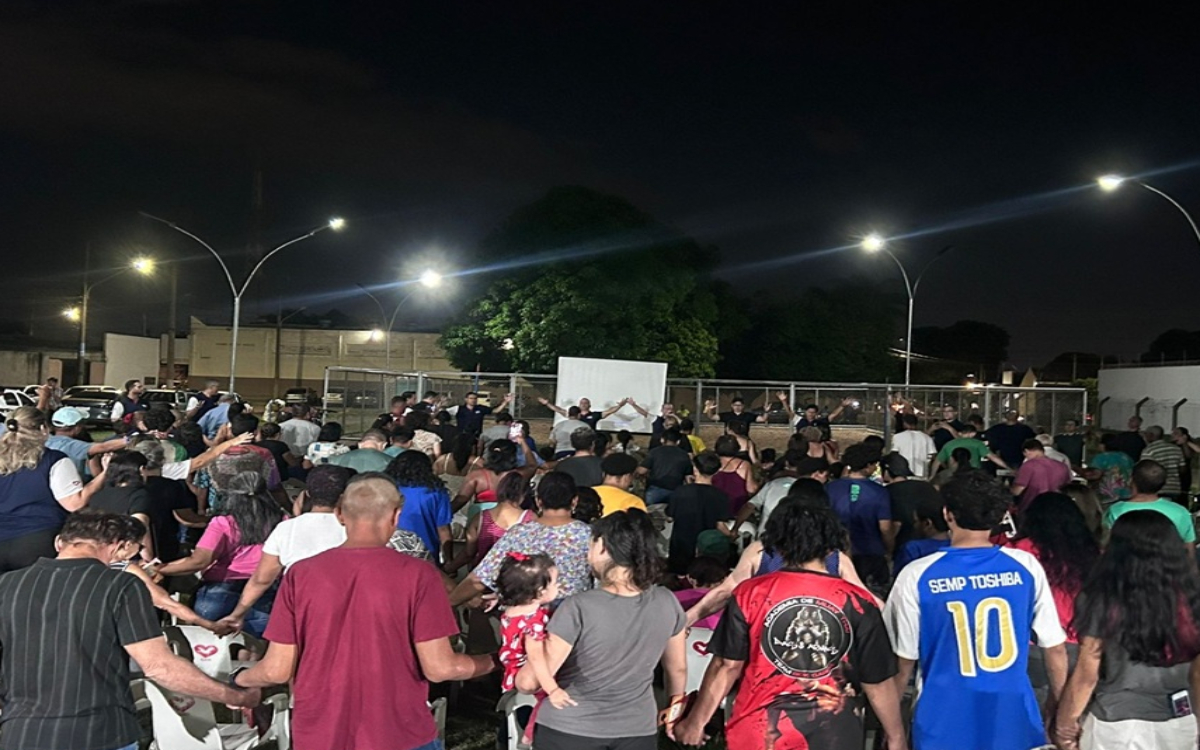
The sun hung low in the sky, casting a warm golden hue over the small town of São Luís, Maranhão, as church bells tolled in the distance. A palpable sense of anticipation filled the air, electrifying those gathered for a momentous occasion. Clad in white baptismal robes, a diverse group of believers waited eagerly by the riverbank, their hearts brimming with excitement and hope. This wasn’t just any baptism; it was a gathering that would reflect a powerful union of faith and inclusivity—a baptism in Libras (Brazilian Sign Language).
As the splash of water mixed with the rhythmic pulse of prayer and worship, the moment transcended mere ritual. It was on August 4, 2026, that the Assembleia de Deus, a prominent evangelical church in São Luís, organized this unique ceremony aimed at empowering the deaf community. The initiative stemmed not just from a desire to baptize, but from a yearning to break barriers—inviting deaf individuals into the life of the church in a language they could understand deeply and personally.
The Pastor João de Sousa stood at the forefront, his expressive body language weaving a tapestry of faith as he communicated the significance of baptism. “Today, we celebrate your decision to follow Christ,” he signed, as his eyes sparkled with genuine joy. “You are not isolated; you are part of the body of Christ!” This message resonated deeply within the hearers. For many in the community, this baptism provided a tangible symbol of belonging and acceptance, a chance to be seen and heard in ways they had not felt before.
Among the baptised was a spirited young woman named Ana Clara. With her hair swept up into a bun and a vibrant smile lighting up her face, she recounted her journey of faith. Ana grew up feeling detached from church services, struggling to grasp the messages being delivered. But a friend invited her to a gathering that embraced Libras. “For the first time, I felt included! It was as if God was speaking directly to my heart,” she shared, her hands telling her story with passion. This baptism was a culmination of her faith journey—a step into the waters that promised new life and community.
The gathered crowd witnessed the very essence of what Paul described in 1 Corinthians 12:12-13, proclaiming that in Christ, all are one. The act of lowering each believer into the water was not merely a ritualistic embrace but a powerful affirmation of God’s love that sees no barriers. Families erupted into cheers, tears rolling down their faces, as the previously quiet river came alive with joy and praise. It was a mirror of the early Church, where differences melted away in the face of shared faith.
As night fell and lanterns illuminated the riverside, people lingered, sharing testimonies, laughter, and fellowship. Each story added a brushstroke to a larger mural of unity, where God’s love encompassed every person, every language, and every background. For Ana Clara, standing among her newly baptized family, it was the birth of hope—a promise that she was not alone in this journey of faith.
In a world often divided by silence and barriers, this poignant gathering at the riverbank in Maranhão served as a clarion call to embrace all of God’s children. It reminded the community that the love of Christ knows no bounds and that every voice—audible or silent—has a place in His kingdom.
As new believers were welcomed into their spiritual family, they left the river transformed. The air was charged with hope and faith—a fitting prelude to the bright futures that lay ahead. Like the waters they’d just emerged from, their lives were now filled with the promise of connection and compassion, echoing the words of 1 John 4:19, “We love because He first loved us.”
As you reflect on this story today, consider how you can be a bridge in your own community, creating spaces of belonging and acceptance. How can you extend God’s love to those who feel unheard or unseen? Let this baptism inspire you to share Christ’s message of inclusivity, lighting a path forward for others to follow. 🌊❤️